How to Book Your Wedding Vendors: A Planner's Guide to Contracts, Deposits, and Asking the Right Questions
How you book your wedding vendors matters just as much as who you book. The right team, secured in the right order and on the right terms, gives you the flexibility to refine your vision while protecting your investment along the way.
After years of planning, coordinating, emceeing, and officiating weddings across Southern California and beyond, I've learned that some of the most expensive booking surprises come from the smallest details. A credit card fee that increases with your payment amount. A final guest count due earlier than expected. A contract clause that places an unexpected responsibility on you.
This guide covers the booking practices I recommend to my couples, what to look for in each vendor category, and the questions worth asking before signing on the dotted line.
Wedding Vendor Booking Best Practices
Before exploring individual vendor categories, these seven practices will help you make informed decisions throughout the booking process.
1. Pay the Retainer or Deposit, Not Necessarily the Full Balance
Whenever possible, secure your vendor with the required retainer or deposit rather than paying the entire balance upfront. Your guest count, floor plan, and design may evolve throughout the planning process. Paying in full too early can complicate adjustments, particularly with rentals, florals, and catering, where quantities often change as your wedding approaches.
Every vendor has their own payment schedule, and some services require earlier or milestone-based payments. Review these terms before signing and, where appropriate, ask whether your final balance can be tied to confirmed quantities or deliverables.
The goal isn't to delay payments unnecessarily. It's to maintain reasonable flexibility while honoring your contractual commitments.
2. Read Every Contract Before You Sign
A beautifully curated proposal is exciting, but your contract is what defines the agreement.
Before signing, confirm:
Wedding date, venue, and service hours
Detailed scope of services and included deliverables
Itemized products, quantities, and applicable fees
Payment schedule and due dates
Deadlines for changes or cancellations
Postponement, cancellation, and refund provisions
Overtime, additional labor, and other potential charges
If a vendor makes a promise during a consultation, request that it be documented in the agreement or confirmed in writing.
For my full-service planning clients, I'm happy to serve as a second set of eyes on vendor contracts, identify missing details, and help negotiate business terms such as pricing, inclusions, and timing.
For coordination clients, my focus is ensuring that the agreed-upon services are properly incorporated into our wedding-day logistics and execution.
Please note that I am not an attorney, and my contract review does not constitute legal advice. For questions involving enforceability, legal liability, or contractual risk, I recommend consulting a qualified attorney before signing.
3. Understand Credit Card Processing Fees
Before paying any invoice by credit card, ask whether the vendor charges an additional fee and exactly how that fee is calculated.
Some vendors charge a flat amount, while others apply a percentage to the transaction. A fee that seems insignificant on your initial deposit can become considerably larger when applied to the remaining balance.
Here's a simple example:
If your credit card earns 2% cash back but your vendor charges a 4% processing fee, you're paying approximately 2% more than you're earning in rewards.
For a $5,000 payment:
4% processing fee: $200
2% cash back: $100
Net additional cost: $100
Credit cards may offer additional benefits, including certain purchase protections, so the lowest transaction cost isn't always the only consideration.
My recommendation? Compare your payment options before making a large transaction, and make sure any additional fees are properly disclosed.
4. Know Your Change Deadlines
Every vendor operates on their own production schedule. Your florist may need final centerpiece quantities weeks before the wedding, while your caterer may require a guaranteed guest count closer to the event.
Once these deadlines pass, reductions may no longer qualify for a refund or adjustment. As soon as you sign a contract, record all relevant deadlines in your master planning timeline. This gives you the opportunity to make thoughtful decisions before your quantities become final.
5. Do Your Due Diligence Before Booking
A beautiful Instagram portfolio is a wonderful introduction, but it shouldn't be the only reason you book a vendor. Research their experience, review recent work, and pay attention to how they communicate throughout the inquiry process. Ask yourself whether they understand your priorities, provide clear answers, and demonstrate the level of organization your celebration requires.
If something is unclear, ask questions before signing. A reputable professional should be comfortable explaining their process, policies, and scope of services.
A little extra research now can prevent significant misunderstandings later.
6. Look at Value, Not Just Price
Wedding vendor pricing varies considerably, and the lowest quote isn't necessarily the best value. Before comparing prices, consider each vendor's experience, portfolio, service inclusions, specialization, and ability to execute the type of celebration you're envisioning.
For example, bilingual wedding emceeing requires far more than speaking two languages. A skilled Vietnamese-English emcee must understand cultural traditions, navigate family dynamics, engage different generations, and create a seamless experience for every guest. That level of specialization can influence pricing, just as it does for photographers experienced in multicultural ceremonies or florists specializing in elaborate installations. Invest intentionally in the professionals whose expertise matters most to your celebration.
7. Get Everything in Writing, Even With Traditional Vendors
Some wonderful vendors still operate the traditional way: through phone calls, personal relationships, and verbal agreements. While this approach can feel refreshingly personal, it may leave important details open to interpretation.
If a vendor doesn't provide a formal contract, request a written confirmation outlining the wedding date, services, quantities, total price, and payment terms. At minimum, retain documentation of your agreement and receipts for every payment, including cash transactions. A written record helps establish expectations and provides a reference if questions arise later.
How to Choose a Wedding Emcee
A great wedding emcee does far more than make announcements. They establish the atmosphere, connect with guests, and guide the evening's transitions so the celebration feels effortless.
For bilingual weddings, confirm fluency in both languages and experience navigating the cultural traditions involved. Bilingual emceeing isn't simply word-for-word translation.
Ask how they collaborate with the DJ, venue captain, photographer, and planning team.
Confirm their process for learning names, pronunciations, family introductions, and speaking order.
Discuss their hosting style and whether it complements the atmosphere you want to create.
Your emcee plays a significant role in how guests experience the celebration. Choose someone who makes you feel confident, understood, and genuinely excited.
How to Choose an Officiant
Your wedding ceremony is one of the most personal moments of the entire celebration.
Request a sample video to understand the officiant's delivery and tone.
Ask how they personalize the ceremony to reflect your relationship and values.
Confirm they're authorized to solemnize marriages in your wedding location and clarify who is responsible for completing and returning the marriage license.
If you're incorporating multiple cultures or faiths, discuss their experience honoring those traditions.
How to Choose Your Wedding Venue
Your venue influences nearly every major planning decision, from guest capacity and vendor logistics to design possibilities and overall budget.
Tour the property at a time that reflects your planned wedding schedule, when possible.
Clarify exactly what's included, such as tables, chairs, linens, getting-ready spaces, and setup access.
Review food and beverage minimums, service charges, taxes, and outside vendor fees.
Request vendor guidelines and certificate of insurance requirements before committing.
Discuss weather contingencies and physically tour the backup space.
Confirm access hours, event restrictions, and required breakdown times.
Your venue establishes many of the parameters your remaining vendors will need to work within, making it one of your earliest and most important decisions.
What to Look for in a Wedding Photographer
Your wedding photographs will remain long after the celebration ends. Look beyond the carefully curated highlights.
Request two or three complete wedding galleries to evaluate consistency throughout an entire event.
Consider their editing style and whether it reflects your long-term preferences rather than a passing trend.
Confirm coverage hours, second photographer availability, and gallery delivery timelines.
Discuss the moments that matter most, especially cultural traditions such as a Vietnamese tea ceremony.
Make sure your personalities complement one another. Your photographer will be present for many of your most intimate moments.
What to Look for in a Wedding Videographer
Wedding films preserve something photographs cannot: movement, voices, and the atmosphere of the celebration.
Watch full ceremony films and longer edits, not just social media teasers.
Evaluate audio quality, especially during vows and speeches.
Ask how sound will be captured and whether coordination with your DJ or audio team is required.
Clarify included deliverables, such as highlight films, ceremony footage, speeches, and raw footage.
Confirm expected delivery timelines and any additional editing fees.
How to Choose a Wedding Florist
Floral design should complement your venue, reflect your aesthetic, and work realistically within your overall investment.
Review examples of actual weddings, including installations and completed reception spaces.
Look for a florist who can thoughtfully adapt your inspiration to your budget.
Prepare a floral wish list, inspiration images, color palette, and venue details before requesting a detailed proposal.
Discuss potential substitutions, particularly when specific flower varieties are seasonal or subject to availability.
Confirm delivery, installation, repurposing of ceremony arrangements, breakdown, and rental pickup responsibilities.
Understand the payment schedule and whether proposed quantities can be adjusted as your design develops.
Remember that floral proposals often evolve throughout the planning process. The goal is to establish a clear creative direction and investment range before finalizing every detail.
How to Book Rentals
Wedding rentals are one of the categories where flexibility can be particularly valuable.
Your final chair, table, and linen quantities depend on your guest count and floor plan, both of which may change during planning.
Ask whether a deposit can secure your reservation, with the balance due according to an agreed payment schedule.
Review rental pieces in person or request recent photographs to verify finishes, materials, and colors.
Confirm delivery and pickup dates, including overnight or next-day pickup requirements.
Ask about additional charges for labor, stairs, long carries, setup, breakdown, and special delivery windows.
Understand when quantities become final and whether reductions are permitted.
Review damage, loss, and replacement policies.
Ask about credit card fees and available alternative payment methods.
I always recommend confirming rental logistics with your venue before signing, especially when installation and pickup windows are restricted.
How to Choose a Caterer
Your catering team affects more than the meal itself. Service timing, staffing, and guest experience all depend on thoughtful coordination.
Schedule a tasting and sample the dishes you're seriously considering.
Request a detailed proposal showing menu pricing, staffing, service charges, taxes, and any applicable gratuity.
Confirm staffing appropriate for your preferred service style, whether plated, buffet, or family-style.
Discuss dietary restrictions, food allergies, and the process for handling special meals.
Ask about vendor meals, cake cutting, outside catering restrictions, and additional service fees.
Confirm final guest count deadlines and guaranteed minimums.
Clarify what happens if attendance decreases after your guarantee is submitted.
How to Choose a DJ or Live Band (Or Both!)
Your entertainment team creates the soundtrack and atmosphere of your reception.
Request recent performance footage, live mixes, or samples relevant to your preferred music.
Ask how they adapt to the audience and manage transitions throughout the evening.
Confirm whether ceremony and cocktail hour audio are included.
Review microphone requirements for the officiant, emcee, speeches, and performances.
Discuss cultural music preferences, must-play songs, and do-not-play selections.
Confirm setup requirements, power needs, performance breaks, and overtime pricing.
If you're hiring a separate professional emcee, make sure both vendors understand their respective responsibilities and how they'll collaborate.
How to Choose Hair and Makeup Artists
Your beauty team should understand your aesthetic, schedule, and the practical demands of your wedding day.
Review photographs in natural lighting and on skin tones and hair textures similar to your own.
Schedule a trial to evaluate your preferred look and how it wears throughout the day.
Confirm pricing, minimum booking requirements, artist assignments, and the number of services each artist can accommodate.
Ask about travel, early-start, additional artist, and touch-up fees.
Discuss attire changes, especially if your celebration includes both an áo dài and a Western wedding gown.
Clarify whether touch-up kits or extended artist coverage are available.
Remember that your beauty timeline influences when photography begins, so scheduling should be coordinated carefully with the rest of your wedding morning.
How to Choose a Cake and Dessert Baker
A beautiful dessert display should deliver on both presentation and flavor.
Schedule a tasting and explore flavors that complement your menu and preferences.
Review photographs of completed wedding cakes and dessert installations.
Ask how many servings are recommended for your guest count.
Confirm delivery, setup, display rentals, and any cake stand requirements.
Clarify whether your venue or caterer charges a cake cutting or dessert service fee.
Review final quantity deadlines and delivery requirements.
Planning Vendors for a Vietnamese Tea Ceremony
A Vietnamese tea ceremony is a meaningful celebration of family, heritage, and tradition. It deserves the same thoughtful planning as your wedding ceremony and reception.
Discuss the ceremony timing and expectations with both families before confirming vendors.
Reserve tea sets, ceremonial trays, and décor with clear delivery and return arrangements.
Choose photographers and videographers who understand the pace and significance of each tradition.
For residential celebrations, plan for parking, vendor access, setup space, and guest movement.
Consider a bilingual emcee or tea ceremony coordinator who understands the customs and can guide the families with warmth and confidence.
Every family celebrates differently. Open communication with your loved ones helps ensure the ceremony feels authentic and meaningful to everyone involved.
Vendor Booking Timeline
One of the most common questions I receive is: How early should we book our wedding vendors?
The answer depends on your wedding date, location, guest count, priorities, and the availability of your preferred professionals.
The following is a general planning framework rather than a fixed industry requirement. Popular dates, destination celebrations, and highly sought-after vendors may warrant earlier inquiries.
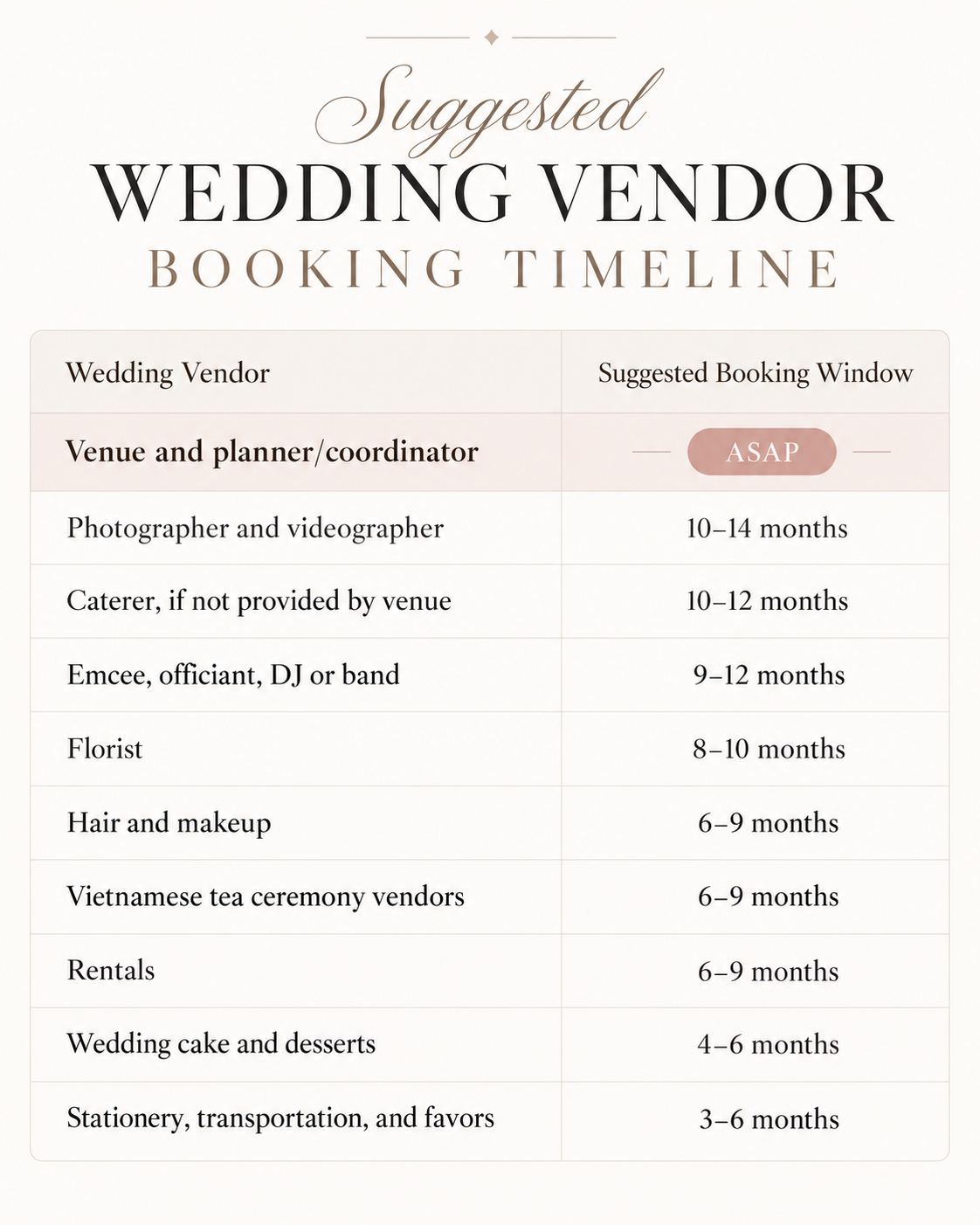
I recommend prioritizing vendors who can only accommodate one wedding per date, particularly when you've found someone whose work and expertise you genuinely love.
Reading Reviews and Asking for Referrals
A portfolio showcases a vendor's creative work. Reviews and referrals offer valuable insight into the experience of working with them.
Read recent reviews across multiple platforms, such as Google, WeddingWire, The Knot, and Yelp.
Pay attention to recurring feedback about communication, professionalism, and reliability.
Observe how vendors respond to constructive criticism.
Consider requesting references from couples with similar celebrations or venues.
Ask your wedding planner and venue for recommendations based on firsthand experience.
Remember that reviews provide individual perspectives. Look for consistent patterns rather than allowing one particularly positive or negative experience to define your decision.
Wedding Vendor Red Flags to Watch For
The booking experience can reveal important information about how a vendor operates.
Potential warning signs include:
Repeatedly vague or unreasonably delayed communication
Pressure to make an immediate payment without sufficient time to review the agreement
Missing or inconsistent written documentation
Unexpected fees that aren't clearly explained
Limited examples of real weddings or comparable events
Inability to provide required insurance documentation
Consistent negative feedback concerning missed deadlines, reliability, or professionalism
Not every concern is automatically a dealbreaker. What's important is how the vendor addresses your questions and whether you're comfortable with the answers.
Booking Vendors for a Destination Wedding
Destination weddings introduce additional considerations, particularly when professionals are traveling across state lines or internationally.
Decide which vendors you want to bring with you and which services are best sourced locally.
Confirm all travel-related expenses, including airfare, accommodations, ground transportation, meals, and applicable travel fees.
Discuss who is responsible for booking travel and whether reservations require mutual approval.
Review local venue policies, permits, noise restrictions, and weather contingencies.
Verify officiant eligibility and the marriage license requirements specific to your destination.
Allow additional time for deliveries, shipping, and communication across time zones.
Having planned and worked at destination weddings, I've found that clear expectations around travel and on-site responsibilities are essential to creating a seamless experience for everyone involved.
Wedding Vendor Gratuity and Meals
Gratuities and vendor meals are sometimes overlooked during the initial budgeting process, but they deserve thoughtful consideration.
Review vendor contracts to identify included gratuities, service charges, and any additional tipping expectations.
Remember that a service charge does not necessarily mean gratuity is included or distributed to staff.
Gratuity is generally a discretionary expression of appreciation unless otherwise required by your agreement.
Prepare and label gratuity envelopes in advance, and designate someone to distribute them.
Plan appropriate meals for vendors working through dinner service, including your planner, emcee, DJ, photographer, and videographer.
Confirm vendor meal pricing and submit the required meal count by your caterer's deadline.
And never underestimate the value of a thoughtful review after the wedding. Sharing your experience is a meaningful way to recognize the professionals who helped bring your celebration to life.
Wedding Vendor Booking FAQ
How far in advance should I book wedding vendors?
As a general planning guideline, couples can begin researching venues and wedding planners approximately 12 to 18 months before their celebration. Photography, entertainment, catering, and other priority vendors typically follow. Highly sought-after professionals and destination weddings may require earlier bookings.
Are wedding vendor deposits refundable?
Refundability depends on the terms of your agreement and applicable law. Some vendors use nonrefundable retainers to reserve a date, while others have different deposit and cancellation policies. Always review the specific terms before making a payment.
Should I pay my wedding vendors in full upfront?
Not necessarily. When the vendor offers flexible terms, paying an initial retainer or deposit and following the agreed payment schedule may help preserve flexibility. Some vendors require earlier payment or milestone installments, so clarify expectations before signing.
Is it better to pay wedding vendors by credit card or cash?
Compare the cost of any credit card processing fee with the rewards and benefits offered by your card. Cash or check may be less expensive when additional card fees outweigh rewards, but payment protections and recordkeeping are also worth considering.
Why might a bilingual wedding emcee cost more?
Bilingual wedding emceeing is a specialized service that involves language fluency, cultural understanding, audience engagement, and event management. Pricing reflects the individual professional's experience, expertise, and service offerings rather than language skills alone.
What if my wedding vendor doesn't provide a contract?
Request written confirmation of the agreed services, wedding date, pricing, and payment terms before proceeding. Keep copies of all correspondence and receipts. For significant financial commitments, consider obtaining a formal written agreement.
Do I need to tip my wedding vendors?
Tipping practices vary depending on the vendor, service, and your contractual arrangements. Review your agreements first, particularly for venues and catering companies that may already include gratuities or service charges.
Book Your Wedding Vendors With Confidence
The best wedding teams are built with intention.
Beyond beautiful portfolios and impressive proposals, look for professionals who communicate clearly, honor their commitments, and understand the experience you're hoping to create.
Read your contracts carefully. Ask thoughtful questions. Understand your payment obligations. And most importantly, invest in people whose expertise allows you to feel confident and genuinely present throughout your celebration.
Because the purpose of thoughtful wedding planning isn't simply to create a beautiful event. It's to give you the freedom to enjoy it.
If you're planning a wedding in Southern California or a destination celebration and would love an experienced professional guiding you through the process, I'd be honored to hear about your vision.